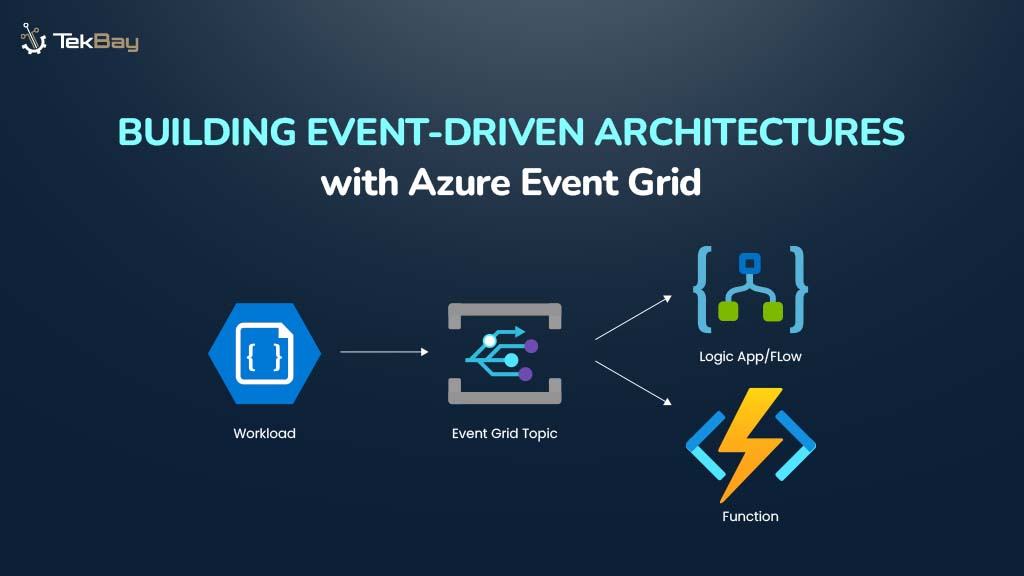


Azure offers several ways to build serverless solutions. In many scenarios, especially those involving automation, integration, and event-driven workloads, Azure Functions and Logic Apps emerge as top-tier options.
These fully managed Azure services let you run workflows without worrying about servers, but the way they work—and the problems they’re best at solving—are very different.
This blog explores the key differences, features, and guidance on when to choose each service.
Azure Functions: Features and How It Works
Azure Functions is a serverless computing service built for executing code in response to events—whether an HTTP request, a timer, or a change in data.
It allows small pieces of code to run without managing infrastructure and doesn’t require the application to run continuously. Functions are created, configured, and uploaded as needed and then triggered by specific events or conditions.
Features:
1. Code-Driven Event Execution
Azure Functions lets developers execute custom code in response to triggers like HTTP requests, database changes, or message queue events. It supports multiple programming languages, including C#, JavaScript, Python, and PowerShell, allowing flexibility in application development.
2. Local Development and Debugging
Functions can be developed and tested locally using tools like Visual Studio or VS Code before deploying them to the cloud. This enhances developer productivity by enabling faster iterations, troubleshooting, and testing.
3. Streamlined Development and Deployment
Azure Functions simplifies the development and deployment processes. You can focus on writing individual functions that perform specific tasks rather than dealing with the complexities of managing the entire application infrastructure.
Azure Logic Apps: Features and How It Works
Azure Logic Apps is a workflow integration platform that automates and orchestrates workflows and tasks without the need for complex coding.
It provides low-code/no-code tools to integrate with legacy, modern, and cutting-edge systems, whether in the cloud, on-premises, or hybrid environments. A visual designer and prebuilt operations simplify the process of building workflows.
Logic Apps also offers an extensive library of pre-built connectors, making integration with various Azure services, SaaS applications, and external systems easy. These connectors act as building blocks within workflows, enabling access to resources and completing common tasks such as retrieving, sending, and managing data.
Features:
1. Automates Complex Workflows Without Extensive Coding
Logic Apps reduces development time by enabling the automation of workflows with minimal coding, thus reducing human errors in manual tasks.
2. Prebuilt Connectors for Seamless Integration
With over 1,400 pre-built connectors, Logic Apps allows for quick integration with popular services like SQL Server, SharePoint, Salesforce, and Google services, simplifying backend connectivity.
3. Visual Workflow Designer for Easy Automation
The drag-and-drop interface allows users—regardless of technical skill level—to design and manage workflows, making automation accessible to a broader audience.
Azure Logic Apps vs. Azure Functions: Key Differences
| Feature | Azure Logic Apps | Azure Functions |
| Approach | Designer-first (declarative), visual workflow design | Code-first (imperative), custom code execution |
| Development Style | Visual workflow-based designer (drag-and-drop) | Code-based (using languages like C#, JavaScript, Python, etc.) |
| Execution Type | Orchestrates workflows by connecting multiple services | Executes custom logic in response to specific events |
| Processing Type | Best suited for long-running processes connecting multiple services | Best for short-lived processes; supports Durable Functions for long-running workflows |
| Integration | 1,400+ prebuilt connectors for easy service integration | Requires custom code to integrate with external services or APIs |
| Use Cases | Business process automation, system integration, complex workflows | Data processing, background tasks, APIs, microservices, event-driven applications |
Choosing the Right Fit: Azure Functions vs. Logic Apps for Workflow Automation
When it comes to automating workflows in the cloud, choosing between Azure Functions and Logic Apps depends on your specific use case and requirements. Below are some key factors to help guide your decision:
1. Choose Azure Functions If:
- You need to execute custom business logic in response to events.
- You are working on APIs, background tasks, or event-driven applications.
- You need to process data, validate inputs, or transform messages efficiently.
- You are dealing with synchronous request/response calls that execute complex logic.
Example Use Cases:
- API Endpoints: A REST API that processes and validates customer orders.
- Real-time Data Processing: A function that transforms incoming data from IoT devices and pushes it to storage.
- Background Tasks: Event-driven tasks like sending SMS notifications when a new user signs up.
2. Choose Azure Logic Apps If:
- You need to orchestrate workflows across multiple services.
- You require asynchronous processing or fire-and-forget messaging that requires reliable processing.
- You want to integrate applications and automate business processes with minimal coding.
Example Use Cases:
- Automated File Transfer: Moving files from an SFTP server to Azure Storage.
- Automated Notifications: Sending emails or notifications based on events, such as a new file being uploaded.
- CRM Integration: Triggering workflows when a new customer is added to Salesforce, updating multiple connected systems.
Conclusion
Azure Functions and Azure Logic Apps each offer unique advantages depending on the task at hand. Azure Functions is ideal when custom logic and flexibility are required, especially for event-driven scenarios, APIs, or microservices.
On the other hand, Azure Logic Apps excels at automating workflows and integrating services with minimal code, making it perfect for orchestrating processes across multiple systems.
Choosing the right tool depends on whether the focus is on custom execution or streamlined automation.